Adapting to Survive: How 5 Kiwi Businesses Pivoted
Resilience isn't just about bouncing back; it's about shifting your perspective to see new opportunities when the market suddenly changes.
The market rarely cares about your well-laid plans.
When the pandemic hit, thousands of businesses faced an unprecedented challenge. Many unfortunately folded. But some didn't just survive; they evolved entirely. These five Kiwi businesses utilized a psychological concept called Cognitive Reframing—they consciously shifted their perspective from seeing a "threat" to seeing a "new challenge," turning a structural break in the economy into a launchpad.
1. Nanogirl Labs: Radical Acceptance
The Challenge: Their primary revenue stream—live, in-person science shows—vanished overnight. Revenue effectively hit zero.
The Strategy: Founders Joe Davis and Dr. Michelle Dickinson didn't wait for things to go back to normal. They pivoted immediately to a digital subscription model, offering daily science adventures for $1 a day. They filmed the content right in their own kitchen.
The Lesson: Launch the imperfect version immediately. Waiting until they could afford a "perfect" studio setup would have killed their momentum. In business, speed is often a feature, not a bug.
2. Countdown: Fast Scalability
The Challenge: A sudden 300% surge in online shopping demand. Their existing customer service and fulfillment systems were breaking under the weight.
The Strategy: They launched "Olive," an AI chatbot capable of handling 300,000 customer conversations, and rapidly converted several physical supermarkets into "Dark Stores" strictly dedicated to fulfilling online orders.
The Lesson: When demand spikes dramatically, you cannot simply throw more human hours at the problem. You must look for ways to automate and systemize your processes.
3. Good George Brewery: Repurposing Assets
The Challenge: Bars shut down across the country. Huge kegs of product sat full with no buyers.
The Strategy: They scanned the current environment and saw a massive gap in the market: Hand Sanitizer. Because they already had the alcohol and the manufacturing lines, they repurposed their equipment almost instantly to meet the new demand. Later, they innovated again by building individual glass greenhouses for safe outdoor dining.
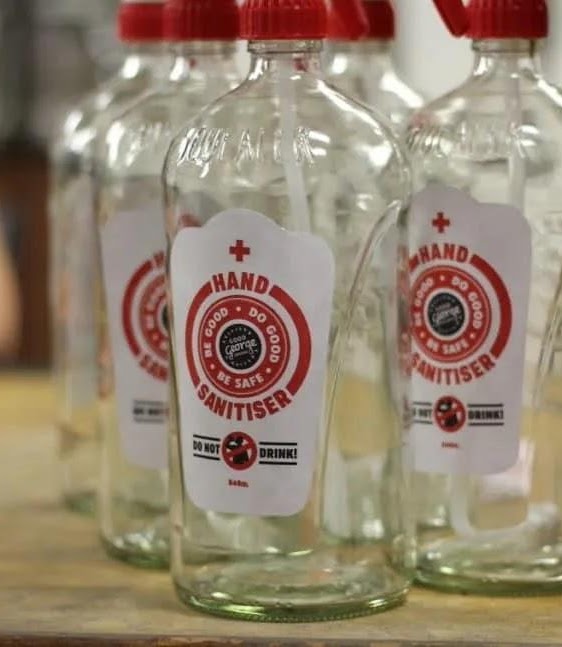
The Lesson: Look closely at your raw assets (your data, your ingredients, your physical space, or your skills). What else can they be used for? Good George succeeded because they addressed a fundamental new need for their customers: Safety.
4. OP Creative: Taking Ownership
The Challenge: Olivia Peterson faced redundancy from her job at age 23.
The Strategy: Instead of viewing this strictly as a setback, she used the redundancy as an "Inciting Incident." Rather than immediately looking for another job, she used her skills to build her own web design agency through aggressive networking and word-of-mouth.
The Lesson: Take ownership of your situation. A sudden setback can simply become the origin story for your own business if you refuse to play the victim.
5. Cafe Hanoi: Extreme Commitment
The Challenge: The hospitality sector was entirely shut down, putting their staff's livelihoods at immediate risk.
The Strategy: Owners Krishna Botica and Tony George made an incredible personal sacrifice: they put their own house up for rent to ensure they could continue paying their staff. When they could reopen, they implemented incredibly strict safety protocols to confidently position themselves as the safest place to eat in the city.

The Lesson: Extreme ownership. Sometimes leadership requires making significant personal sacrifices to protect your team and ensure the long-term survival of the brand.
Your Pivot Checklist
If your business model is currently struggling, use this framework to find a new path.
Need to rethink your strategy?
We can help you audit your current assets and find a new, profitable angle for your business.
Book a Strategy Session Audit Your Website Data