You Might Not Own Your Business Website
If you don't hold the main admin keys, you are merely a tenant in your own digital house. Here is how to take control.
Here is a difficult truth that catches many new business owners off guard: You might be a tenant in your own business.
If you have to email a "web guy" and wait three days just to update a single sentence on your website, you are not in control. If you don't have the master login to your domain registrar, you don't actually own your brand's web address.
You are essentially renting it from a vendor who could disappear, go out of business, or unexpectedly raise their "maintenance fees" at any moment.
We refer to this as a Digital Hostage situation. And unfortunately, in 2016, it happened directly to me.
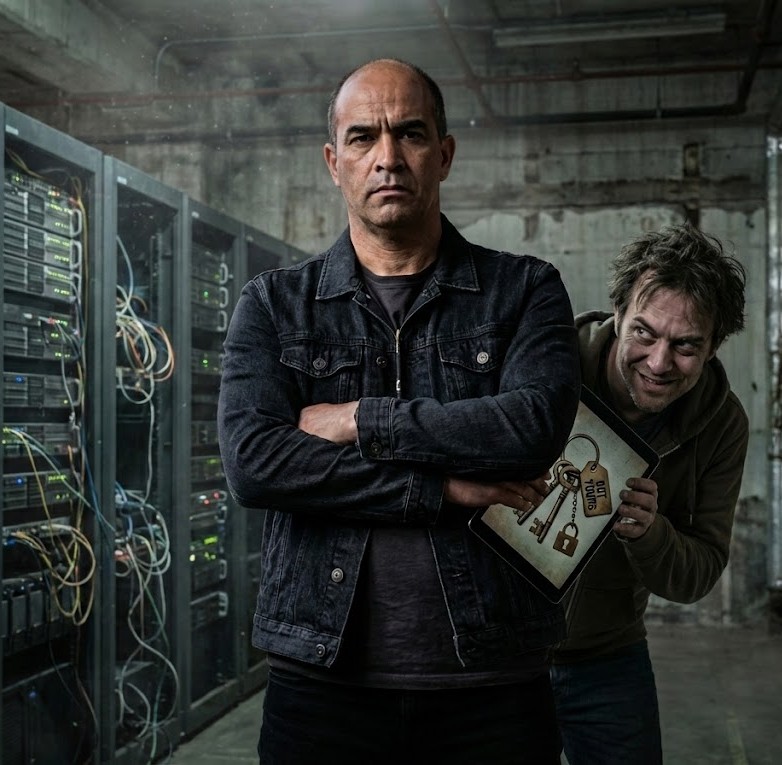
The Pain of Dependency
I know the feeling of the knot in your stomach when your website goes down and the "expert" you hired won't answer the phone. I know the frustration of realizing you’ve spent thousands of dollars building a castle on someone else's land.
It is time to change how small businesses handle their technology.
The Rule of Digital Ownership
At Creative Startup NZ, we believe that "Digital Sovereignty" is a non-negotiable right for business owners. It simply means this: Responsibility is not delegable.
You can (and should) outsource the heavy lifting of building the website, but you must never outsource the master keys.
If you do not hold the keys, you do not own the house.
Many agencies love to lock you into proprietary platforms or complex code. They will often register your domain name under their own email address so you can’t easily leave them. They sell you ongoing "hosting packages" that are often just inflated reselling schemes. They create dependency because your dependency guarantees their monthly income.
Take Back Control
It is time to take ownership of your assets. Being a responsible business owner means verifying that you control your digital footprint.
Be The Owner, Not The Passenger
Stop being a passenger in your own venture. Demand the master login keys from your current provider. If your developer refuses to give them to you, it is time to find a new developer immediately.
When we build for our clients, we intentionally use platforms where you are the ultimate admin. We recommend registrars like 1st Domains or Rocketspark where you hold the primary account. We don't want to trap you into hosting your site with us forever. We want you to own it.
The Importance of a Plan
Passion and hard work are essential, but working hard without a roadmap is like driving fast in the wrong direction. The marketplace demands competence and preparation.
You need a clear business plan. It’s not just boring paperwork to show the bank; it’s your strategy. It’s the discipline to define your goals, your budget, and your assets before you start spending money. If you try to "wing it" with your business structure, you leave yourself vulnerable to these exact types of traps.
Map Out Your Strategy
Answer a few simple questions in our free form. It acts as a roadmap to help you identify gaps in your business strategy before they become expensive problems.
Open Free Generator